How do we know what we know?
Sermon St Peter Milton Lilbourne, 11th August 2019, 9.30am
Eight Sunday after Trinity: Hebrews 11.1-3,8-16 & Luke 12.32-40
Today’s readings invite us to think about things seen and things unseen. Like last week, we are encouraged to put our hope in trust not in the material world around us, but in the things that really matter, things which are often unseen: “For where your treasure is, there your heart will be also”.
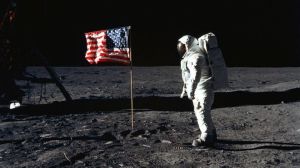 I would like to explore how we can put our trust in things that are unseen. How can we have faith, which as we hear is the assurance of things hoped for? How can we believe without seeing? It is a challenging question, particularly in a world that increasingly puts its trust in the truths acquired through science and the progress obtained by technology.
Being a scientist myself, of course I see the value of science in investigating and getting to know the world around us. However, I do not believe in the apparent opposition between science and faith, as what we can know through science is limited to the way it is used to look for patterns and regularities. Added to that, the God that is often opposed by the more vocal atheists, is a God in which very few people believe. So indeed, I think that there is plenty of room for faith.
The underlying question of both faith and science is ‘how do we know what we know?’ And that question applies both to the things seen and the things unseen, which as we will realise is not the same as the world of science and the world of religion.
 One of the things that makes me feel at home in the UK is a familiar awkwardness in talking about certain things, one of which is money. Whether it’s deciding how much to spend on a retiring colleague or a friend’s wedding, or the moment the bill at the restaurant needs to be paid, we feel a bit embarrassed having the discussion. For the record, the expressing ‘going Dutch’ was something completely alien to me until moving abroad! However, also on a more serious note, relationships have been broken and families torn apart when it comes down to money. I am sure most of us will have heard someone saying, or indeed said ourselves ‘It’s not about the money’, and we start wondering ‘isn’t it?’.
 I have to admit that writing a sermon for last year’s Civic Service on the theme of ‘Education’, was a little bit easier than this year, when the service is taking place in the weekend in which we commemorate and re-enact the battles that took place in Marlborough in 1642. For those interested, according to local tradition, the bullet holes can still be seen on the outside of the St Mary’s Church tower.
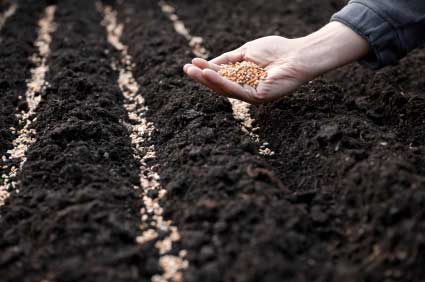 The reading set for today is the well-known parable of the sower (Matthew 13.1-9). We hear how the sower’s seeds fall on different type of ground: a path, some rocky soil, amongst thorns, and some of them fall on good soil. It is a story familiar to many of us, I suspect, and there is a lot that can be said. In this short reflection, I’d like to apply the image of the sower and the seeds to our approach to teaching and learning.
 This morning we hear two very different readings. Paul in his letter to the Colossians speaks in abstract theology about the image of the invisible God. He reflects on Jesus’ divine nature, the Word that was from the beginning and was made flesh. The mystery at the heart of our faith. In our Gospel reading from Luke – the familiar story of Martha and May –, however, we encounter once more the human side of Jesus. The man who was always concerned about others, who spoke with a wisdom which we can still hear today. Indeed, in Paul’s words, that is how the image of the invisible God is displayed: through Christ in all his divinity and all his humanity.
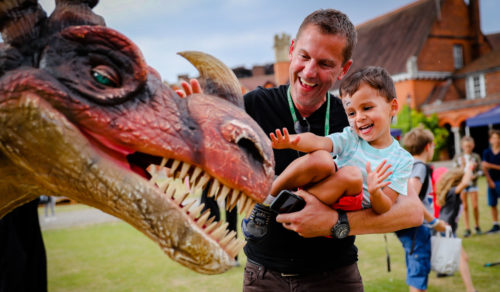 However, when we think about it, we realise that they are actually words of wisdom, conveying a truth we intuitively already know. Because I think, or I hope, that most of us here at Summer School are not here to achieve something, but rather to enjoy the process. There is no certificate, no diploma at the end for most of us, but what remains will be hopefully the memories and the discovery of skills and talents we didn’t know we had.
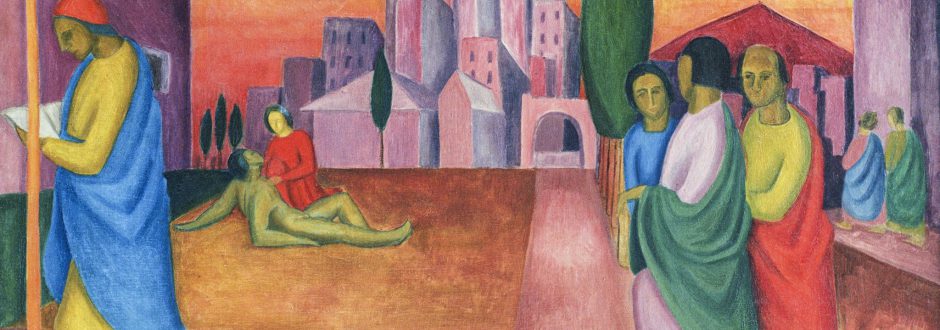 Recently, I watched the film ‘My name is Khan’, a moving film around religious divisions as well as human goodness. An autistic Muslim man seeks to meet the president of the United States after his stepson is killed in the wake of 9/11. Encountering a range of people as he travels, he holds on to the truth told he was told as a child by his mother: there are only two types of people, those who are good and those who are bad.
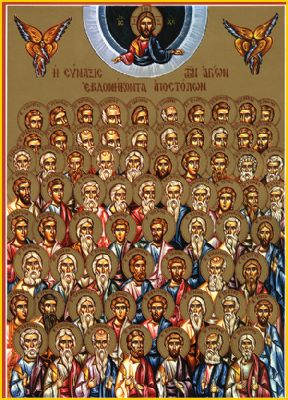 Today’s Gospel reading from Luke speaks about the mission of the seventy, or the seventy-two, depending on which sets of manuscripts are to be believed. The precise number doesn’t matter theologically, as both indicate an expanded scope from the mission of the twelve disciples, which is recorded by Matthew and Mark, as well as by Luke.
 Here we are, on the last day of term. I’m sure most of us are looking forward to the holiday, to a break: a change of scenery and a change of rhythm. Some of us will travel far, others will stay closer to home. However, all of us, at least hopefully, will make it out of Marlborough. And, I also suspect that for most of us, the rhythm of the days and weeks will change for these two months: no check-in, Studies or prep. No assemblies, Chapel or fixtures.
 Discovering Life