Sermon St Mary’s Marlborough, 25th August 2019
Tenth Sunday after Trinity: Jeremiah 1.4-10 & Luke 13.10-17
Last week, rather by coincidence than anything else, I found myself watching the film The Lion King, which was recently produced making you feel you are watching real animals rather than an animation. It being our favourite film as I was growing up, I was rather familiar with the story, but nonetheless moved by its profound simplicity, and of course its beautiful music.
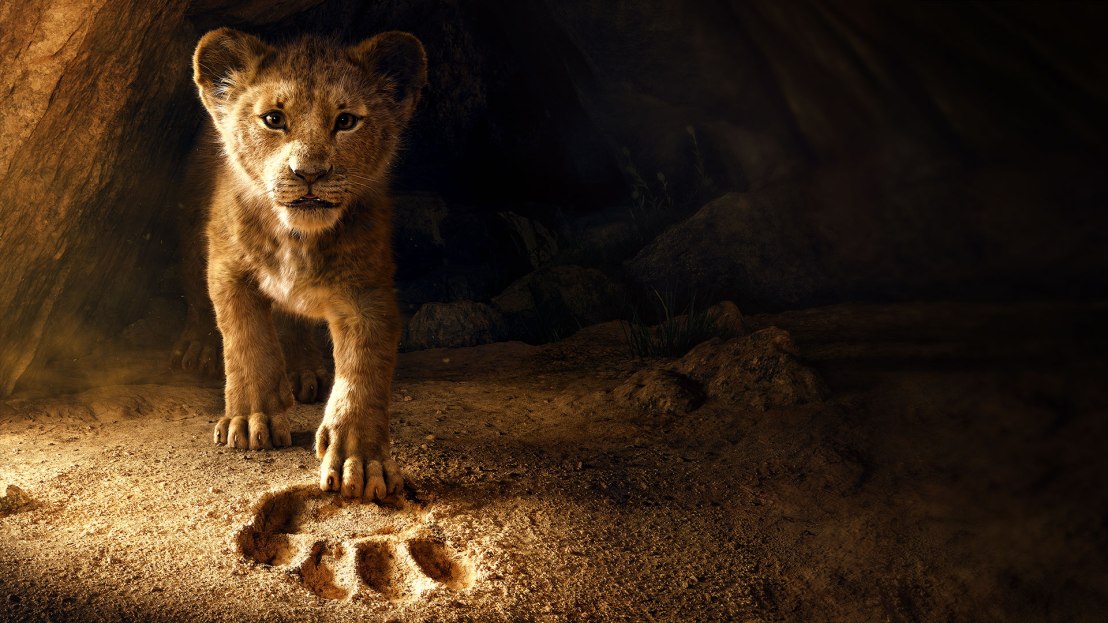
As in so many Disney films, we see the story of good and evil, with which we are so familiar in our human lives, acted out in the lives of fictional characters or animals taking on human features. The Lion King in particular teaches us about the difference between good and bad stewardship – a topic that is maybe even more relevant today than it was twenty-five years ago.
 Given this morning’s readings, it would be so much easier if I was able to preach a good ‘fire and brimstone’ sermon. Ten minutes, or maybe more like twenty-five minutes of telling you how it is clear that we are a doomed generation and that God’s wrath is waiting for us. However, despite a promising start in the more conservative circles of the Dutch Reformed Church, my experience of God has been one of a God who loves us, and who gives us hope, strength and comfort when we most need it.
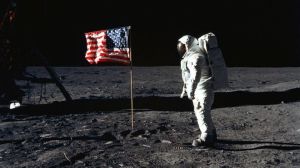 I would like to explore how we can put our trust in things that are unseen. How can we have faith, which as we hear is the assurance of things hoped for? How can we believe without seeing? It is a challenging question, particularly in a world that increasingly puts its trust in the truths acquired through science and the progress obtained by technology.
 One of the things that makes me feel at home in the UK is a familiar awkwardness in talking about certain things, one of which is money. Whether it’s deciding how much to spend on a retiring colleague or a friend’s wedding, or the moment the bill at the restaurant needs to be paid, we feel a bit embarrassed having the discussion. For the record, the expressing ‘going Dutch’ was something completely alien to me until moving abroad! However, also on a more serious note, relationships have been broken and families torn apart when it comes down to money. I am sure most of us will have heard someone saying, or indeed said ourselves ‘It’s not about the money’, and we start wondering ‘isn’t it?’.
 I have to admit that writing a sermon for last year’s Civic Service on the theme of ‘Education’, was a little bit easier than this year, when the service is taking place in the weekend in which we commemorate and re-enact the battles that took place in Marlborough in 1642. For those interested, according to local tradition, the bullet holes can still be seen on the outside of the St Mary’s Church tower.
 This morning we hear two very different readings. Paul in his letter to the Colossians speaks in abstract theology about the image of the invisible God. He reflects on Jesus’ divine nature, the Word that was from the beginning and was made flesh. The mystery at the heart of our faith. In our Gospel reading from Luke – the familiar story of Martha and May –, however, we encounter once more the human side of Jesus. The man who was always concerned about others, who spoke with a wisdom which we can still hear today. Indeed, in Paul’s words, that is how the image of the invisible God is displayed: through Christ in all his divinity and all his humanity.
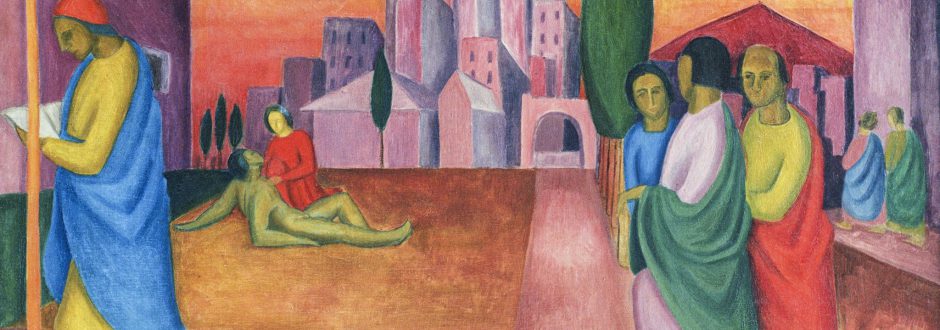 Recently, I watched the film ‘My name is Khan’, a moving film around religious divisions as well as human goodness. An autistic Muslim man seeks to meet the president of the United States after his stepson is killed in the wake of 9/11. Encountering a range of people as he travels, he holds on to the truth told he was told as a child by his mother: there are only two types of people, those who are good and those who are bad.
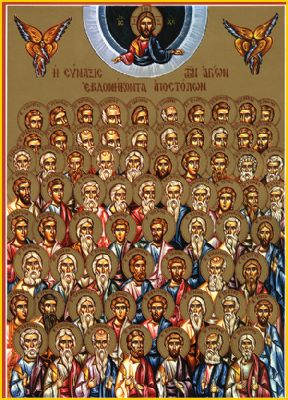 Today’s Gospel reading from Luke speaks about the mission of the seventy, or the seventy-two, depending on which sets of manuscripts are to be believed. The precise number doesn’t matter theologically, as both indicate an expanded scope from the mission of the twelve disciples, which is recorded by Matthew and Mark, as well as by Luke.
 This last weekend of June is traditionally the time at which ordinations take place, as on 29th June the Feast of St Peter and St Paul is celebrated, two of the earliest followers of Christ. In cathedrals across the world, people are committing their lives to a diaconal or priestly ministry, promising before God and others to serve the Church in this particular way. Ordinations are a public commitment to a certain way of life, of discipleship, in a similar way to confirmation and baptism, as well as weddings. What all these services have in common, I think, is that they give everyone an opportunity to celebrate, as well as to reflect on our own unique calling, expressed through the commitments we ourselves have made at various times in our lives.
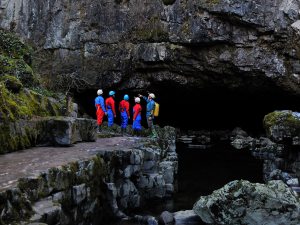 In the Church year, today, the Sunday after Pencecost is known as Trinity Sunday. So, obviously, I have spent most of Shell OA week [a week of outdoor activities in the Brecon Beacons] not thinking about my wet feet, or my wet sleeping bag, or how to make the best hot chocolate for the New Court Shell, but about the best, least boring, way to explain the Trinity this morning. Thus, in the middle of the caves on Thursday, again water-soaked, I realised that maybe there is a comparison to be made between going to Chapel and caving. Hence, as Mr Clark still seems to be employed after comparing Pentecost to Love Island last week, I decided to take the risk. But more about that a bit later.
 Discovering Life