An address given at Marlborough College Chapel
Feast of St Michael and All Angels
Every year, on 29th September, the Church throughout the world celebrates the festival of St Michael and All Angels. As some of you may know, Marlborough College Chapel is dedicated to St Michael and All Angels. I may be wrong, but the only reason I could find why was that it was consecrated on 29th September in the year 1886.

Now, celebrate may a big word for what is happening nowadays, but traditionally it was an important day in the year. Together with Christmas, Midsummer and Lady Day, it is one of the four so-called ‘quarter’ days, which mark the turning of the seasons. Of course, this day marking the end of the summer and the beginning of the autumn and the shortening of the days.
Continue reading “St Michael: The power of story and ritual”
 Every month, the Marlborough Churches Together ministers meet, both to support one another, as well as to discuss what we may do together. One of the things we have been doing together for a long time is the walk of witness on Good Friday. And ever since I have been here, every time we meet, this is a point of discussion. Some of us feel that Good Friday is a solemn day, so the procession through the High Street should reflect this. Others feel that a solemn procession is a terribly poor witness to the Christian faith, and we should be more upbeat and joyful to show the good news of the Easter message.
 In this passage from Mark’s Gospel, Jesus specifically speaks about laws and customs around food. The Jewish had and still has rather strict rules about what can and cannot be eaten under certain circumstances, and how food is to be prepared and eaten. In the verses that are omitted from the reading this morning, Mark makes the comment that Jesus has now declared all foods clean.
 Today’s Gospel reading follows last week’s reading of the feeding of the five thousand. As then, also now, we are invited to reflect on who Jesus is using the familiar image of bread. Last week’s message in many ways was a very comforting one, both for the early readers of the Gospel as well as for us. With God there is always enough and even more. God gathers up what is left over and it is used. Both messages that give us reassurance about God’s loving nature and his care for us.
 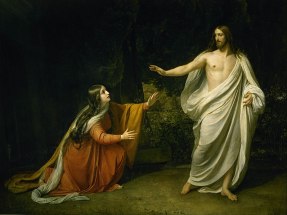 The reading from St John’s Gospel in which Mary Magdalene meets Jesus after the Resurrection (John 20.1-18) is one of my favourite, if not my favourite Bible reading. Mary Magdalene was known as someone with ‘problems’. According to the Gospels of Luke and Mark, Jesus cleansed Mary of seven demons. And in later tradition in the churches of the West, Mary Magdalene has also been identified as the Mary who anoints Jesus, the woman who used to be a prostitute. Although this tradition cannot be deduced directly from the Scriptures, it has been persistent in history.
 The passages from Mark’s Gospel chosen by the compilers of the Lectionary this Sunday, frame the account of the feeding of the five thousand. Hence, we notice that this section has something to say about our human need, and Jesus’ response. So that is what I would like to explore a little further.
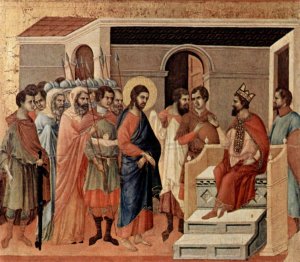 Like last week, also this week’s readings, one from the prophets and one from Mark’s Gospel, lead us to think about prophethood, or about our ability to hear and speak truthfully. This morning, in Mark’s Gospel we hear the account of the beheading of John the Baptist, which I suspect is a story known to many of us. The story occurs in all three synoptic Gospels, in Mark, Luke and Matthew.
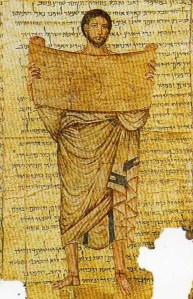 If we’re absolutely honest, I don’t think it’s hard to imagine the scene of today’s Gospel reading happening. For a moment, think back to the place where you have grown up. For some of you that may be this village, or nearby. For others it may be further away. Many of the children we went to school with, we probably haven’t seen for a while. Maybe we can think of one or two of them, who we would be surprised to see speak and teach in public with authority. So, yes, in some ways, we would probably be like one of the people in the synagogue, surprised to see someone come back and teach.
 In the three-year cycle of the lectionary, this year we work our way through Mark’s Gospel. In the early chapters of Mark’s Gospel, we learn about Jesus’ identity. In the last few weeks, we have already heard how Jesus challenges the authorities by ‘working’ on the Sabbath; we see him in his capacity as teacher when he speaks in parables, and how he shows his power in the stilling of the storm.
 Discovering Life