Category: Seasons

The Light shines in the Darkness

Sermon for the first Eucharist of Christmas
Hurstpierpoint College Chapel

A couple of years ago I was speaking to a colleague from Albania. He had come to the UK in the late nineties fleeing the civil conflict at the time. Remembering the continuous threats and fear of his home country, as he arrived here, he could not believe that people here got upset if they didn’t have enough milk in their tea or if the post arrived a day late. However, after a couple of years in safety and security, he noticed how he too got bothered by the trivialities of daily life.

I was reminded of this conversation when reflecting on the year past. On a personal, national and international level, our conversations have been dominated by COVID-19. For all of us, the pandemic has brought a darkness and dullness to our lives, which we could not have imagined a year ago and this has dominated our thinking and our speaking. As many of us have asked ourselves: what did we talk about before COVID? Ok, apart from Brexit and Trump …

I am sure, therefore, that I am not the only one who hears the words from the Prophet Isaiah tonight in that context: “How beautiful upon the mountains are the feet of the messenger who announces peace, who brings good news, who announces salvation.”

Continue reading “The Light shines in the Darkness”
Who are you?

Hurstpierpoint College Senior Chapel Address
Friday 11th December: Advent 3, John 1.6–8,19–28

Although we’re not quite there yet, it is fair to say that we are nearing the end of term, and nearing the Christmas holidays. There are still two-and-a half days of lessons left, and for some of you some last tests for which to revise. Yet, the Christmas trees have been decorated, Secret Santa gifts have been bought – or will have been by Monday – and the list of things to do before Christmas is slowly getting shorter.

In this time between preparation and celebration, I would like to take the opportunity today to take stock. Not so much looking at what we have done or achieved, as there will be plenty of time for that next week. But I do like to reflect on the past few months using the question we hear asked to John in our reading this afternoon: Who are you? What do you say about yourself? Those are questions we all encounter at some point, and it is good to give them some thought.

John the Baptist’s answer that we hear in our reading this afternoon is that he is the voice crying out in the wilderness. He is the one who is proclaiming what is to come after him: Jesus, the Messiah, the Saviour. Those words ‘a voice crying out in the wilderness’ seem to indicate a loneliness, yet there is certainly also a sense of purpose with John. He knows who he is, and that is why he does what he does.

Continue reading “Who are you?”

Are you ready?

Sermon for Advent Sunday at Holy Trinity Hurstpierpoint
Sunday 29th November 2020, Isaiah 64.1-9 and Mark 13.24-end

This Sunday, we mark the beginning of the season of Advent. Four Sundays until Christmas, and traditionally a time of preparation as we anticipate the Incarnation by prayer, the reading of Scripture and fasting. A time of waiting, during which we are invited to reflect on our readiness to celebrate the birth of Jesus. At the same time, during Advent, we are also invited to look ahead to the final coming of Christ as our judge and redeemer and our readiness for that.

Over the years, as society has grown more secular, we have lost some of the immediacy of these two aspects of Advent: the waiting and the judgement. For many of us, Christmas starts no longer on Christmas Eve, but on 1st December. We seem to have lost the ability to wait, as we live in a time where everything is available at the click of a button. We also live in a society that has become weary of the language of judgement, and the idea that we are accountable has become increasingly uncomfortable; a language we try to avoid.

This is how I probably have started most Advent sermons and reflections over the past few years. But this year is different. This year, we have been confronted with a time of waiting that we have not experienced before. This year, we have come to realise that we cannot get everything we want when we want it. At the same time, we are also become more acutely aware of the consequences of our actions. So maybe we need to be challenged too by that uncomfortable language of judgement.

Continue reading “Are you ready?”

When numbers become names

Address for Armistice Day 2020

For over more than a century, people in the Commonwealth have gathered on this 11th November to remember those who have died in wars and armed conflict. Today, Armistice Day, marks the day that the First World War ended, on 11th November 1918. Over the course of that war, 880,000 members of the British forces died. This was 6% of the adult male population and 12.5% of those serving.

In the Second World War there were 384,000 British soldiers killed in combat, and 70,000 civilians in this country died largely due to bombing raids during the Blitz. In the 75 years since 1945, just over 7,000 members of the British military died in armed conflict.

Here at Hurst College, much smaller then than now, the numbers also reflect the enormous impact the two World Wars had. During the First World War 112 former pupils and teachers died in the service of their county. During the Second World War 75 men lost their lives. In addition to them, another ten members of this community have died fighting for our freedom in various other conflicts, including most recently in Afghanistan.

Continue reading “When numbers become names”

The way to freedom

A sermon for the Fifth Sunday of Easter
Acts 7.55-60 & John 14.1-14

We have been adjusting to a new and unfamiliar way of life now for almost two months. We have come to realise the things we miss, and our hopes for the future. The news in these past few weeks has focussed almost solely on Covid-19, and I do wonder if we are indeed focussing too much on ourselves, but I will come back to this later.

IMG_0316

The one day on which the news here in the UK was different, was last Friday: VE or Victory in Europe Day. I suspect a particularly poignant day for those of you who remember the first VE Day: Churchill’s memorable speech and street parties throughout the country. The question in how far the Church should be involved in civic celebrations such as VE Day and Remembrance Day has always been a topic of conversation, as there is a wide range of opinions on the relationship between our faith and armed conflict.

Continue reading “The way to freedom”

The familiar voice

Reflection on the story of the Good Shepherd
Fourth Sunday of Easter: Psalm 23 & John 1.1-10

Our readings this morning make us reflect on God in the familiar image of the Good Shepherd. Although not many of us still live in a place where shepherding is a common profession, the Biblical stories have become very much part of our Western narrative, even for those who would not call themselves Christians.

IMG_0571

That of course comes with its risks, because the way we imagine a shepherd nowadays, will have been very different from what they may have looked and behaved like two millennia ago. However, I don’t want to dwell on that thought too much, but rather share a story that made me think of the Good Shepherd a few weeks ago. I was out on my daily round of exercise on Granham Hill, just around the corner from where I live. Usually there are sheep roaming around at a distance, and the only interaction between them and me is a curious look at one another.

However, on this particular day, one of the sheep was stuck in some barbed wire. Being reminded of my pastoral profession, I felt a duty to see if there was anything I could do. Slowly I approached the sheep, at the same time not trying to scare it as well as thinking how I would go about freeing it. Whilst I was still at a good distance, the sheep was so shocked by my appearance, that this in itself was enough for it to free itself, and quickly it ran away.

Continue reading “The familiar voice”

Taking bread

Sermon for the Third Sunday of Easter
The Road to Emmaus – Luke 24.13-35

EmmausThe beautiful and intimate story that we hear in Luke’s Gospel this morning brings us back to the first Easter Day. On the same day as the women discovered the empty tomb, two of the disciples are on their way to a village called Emmaus, which is a good two hours walk.
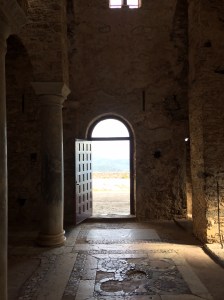
As we can imagine, they are discussing the events of the past days. The triumphant entry into Jerusalem, their hope that Jesus would now show himself to be the Saviour he had told them to be. But then, his capture, condemnation and crucifixion; and now the empty tomb. They are trying to make sense of it all, but I suspect without much success.

This intimate setting of just two people walking and discussing together is one with which we may have become familiar in the last few weeks as well. If we are in a household with more than one person, we too may have had similar walks: discussing the current events and how to make sense of them. Or we may have had these conversations on the phone, or two meters apart in the queue to Waitrose or on our daily round of exercise. In whichever setting, I am sure that we too have found ourselves sad, bereft and anxious, just like these two disciples on the road.

Continue reading “Taking bread”

The doors are locked

Homily for the Second Sunday of Easter
John 20.19-31

IMG_1366This passage from John’s Gospel, Jesus’ appearance to the disciples is traditionally read on the Sunday after Easter Day. It has striking similarities with the preceding passage, which we heard last week: Jesus’ appearance to Mary on the first Easter morning. Maybe one of the most striking differences, however, is the setting: where it takes place. Whereas Mary went to the tomb, searching, the disciples are in a house, hiding.
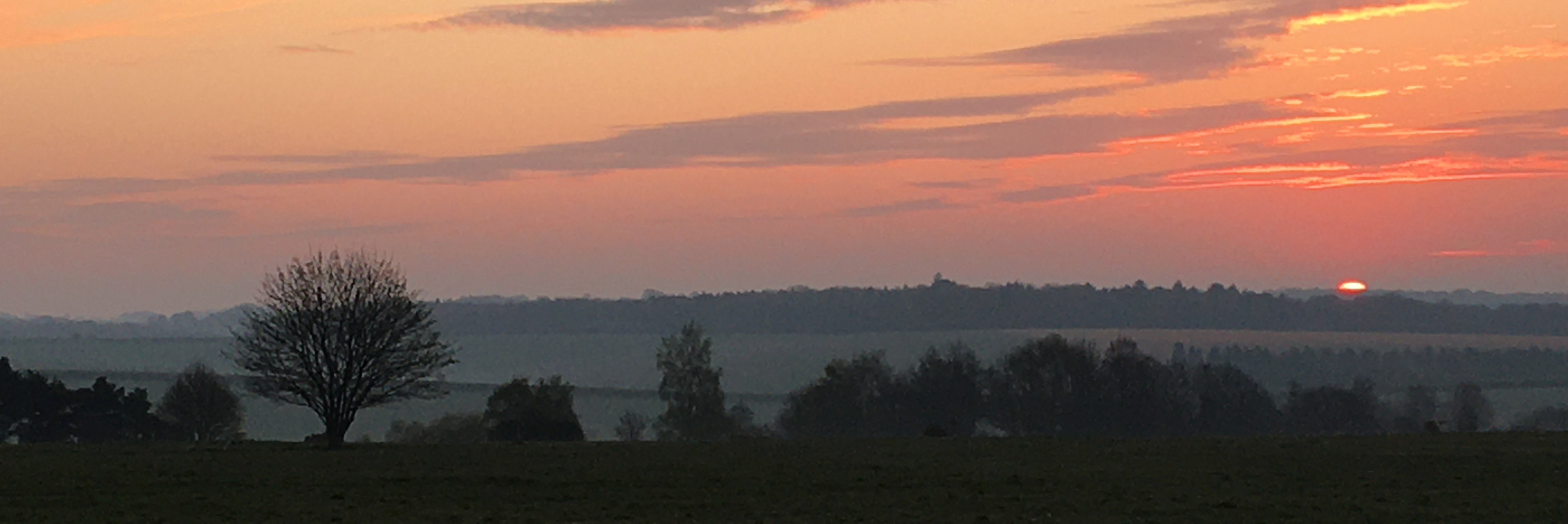
We hear that they have locked their doors, for fear of the Jews. Some commentators argue that the reason ‘for fear of the Jews’ was added in a later version of the narrative, as it does not appear when Jesus appears a second time a week later to reveal himself to Thomas also.

Continue reading “The doors are locked”

It makes all the difference

A reflection for Easter Day
John 20.1-18

It is Easter morning, and the first words on our lips are ‘Alleluia, Christ is risen!’. We then look at the news, in the hope to find the world a different place; a place in which we had never heard about Covid-19, and we felt safe and secure. Yet, we wake up to the same reality as yesterday: what we had wished to be a dream from which we wake, is the world in which we live.

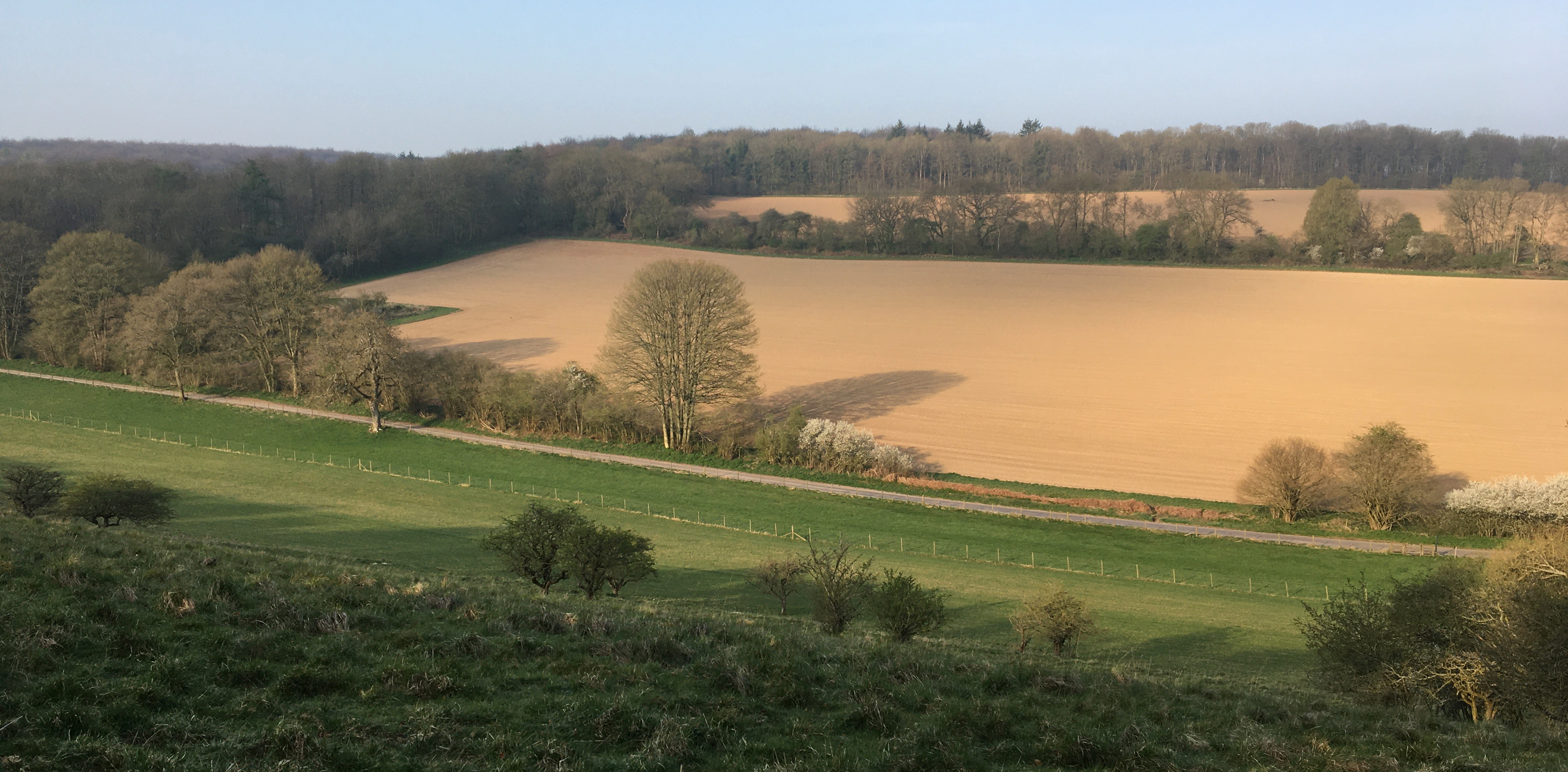
IMG_0631Yet, today, everything is different, although it may not seem so. To understand, let’s look at the story of Mary, one of the most moving stories in the Bible. Early in the morning, while it was still dark, Mary goes to the tomb where they had laid Jesus a couple of days earlier. She is on her own, and I wonder what she is looking and hoping for? Is she hoping that by visiting the grave, she will wake up from this nightmare, and realise Jesus is still there?
Continue reading “It makes all the difference”

Watching and waiting

A reflection for Holy Saturday 

For many of us – we who are not on the frontline in medicine, care or retail – the experience of the global pandemic could be described as a prolonged Holy Saturday. A time of waiting, without knowing what lies ahead of us; without being able to do very much. This inability to help is hard for many of us, whether we have children who we desperately want to help, or elderly relatives, or people we know who depend on help in our local communities.

IMG_0620I suspect that it is very much like the experience that the early disciples, Jesus’ friends and followers and his family had. Still in shock after the events on Good Friday, his sudden arrest followed by his brutal crucifixion, now there is nothing they can do.

Continue reading “Watching and waiting”