A sermon for the Fifth Sunday of Easter
Acts 7.55-60 & John 14.1-14
We have been adjusting to a new and unfamiliar way of life now for almost two months. We have come to realise the things we miss, and our hopes for the future. The news in these past few weeks has focussed almost solely on Covid-19, and I do wonder if we are indeed focussing too much on ourselves, but I will come back to this later.
The one day on which the news here in the UK was different, was last Friday: VE or Victory in Europe Day. I suspect a particularly poignant day for those of you who remember the first VE Day: Churchill’s memorable speech and street parties throughout the country. The question in how far the Church should be involved in civic celebrations such as VE Day and Remembrance Day has always been a topic of conversation, as there is a wide range of opinions on the relationship between our faith and armed conflict.
 However, as soon as I arrived, I also knew that this was not, and would never have been, my final destination. A small part of me had hoped to receive a revelation that would put everything in place, that would possibly change me forever, but I knew deep down that this was not what I was looking for. Before I set off, jokingly I said to a colleague: “I may come back a different person”. His reply was: “I hope not”. It was precisely this truth that I needed to discover, but it was only the journey that had made me realise that I wanted to know what I already knew, and was looking for that which I already have.
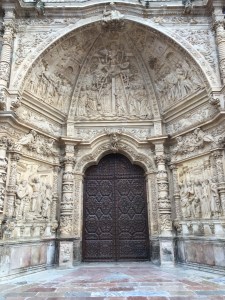 I had every intention for my journey to be a true pilgrimage, preparing myself not only practically, but also spiritually. I went to Confession beforehand, prayed for a blessing upon these two weeks and decided not to take any books apart from my Bible. Working as a school chaplain means in many ways finding yourself at the fringe of the Church community, so I felt that this pilgrimage was an opportunity to focus on my inner spiritual and religious life.
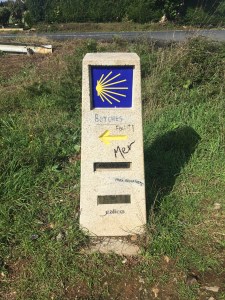 This was more or less what I experienced too, when on the penultimate day of my journey to Santiago, I was sharing the roads with a group of about 40 Spanish teenagers, and remarkable what seemed only one teacher. By this time I had got used to the hours with little noise and the relative isolation whilst walking. So this many people at once was a shock to my system in the first place.
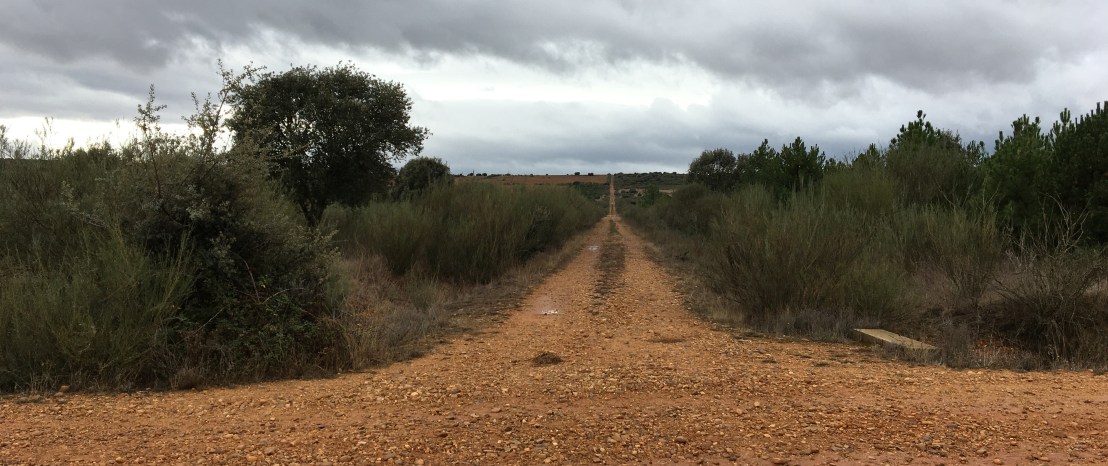 This sense of belonging to a community was also my experience as soon as I arrived in Madrid. At the train station I met an Italian walker, who was also heading to Leon to start her journey there. We talked a little, and then made our way to our allocated carriages. I saw her again a few times in the following week. Although I did not set out to make great friends, the conversations and encounters on the way were moving and profound, whether we shared a common language or not.
 Discovering Life