Homily St Mary’s Marlborough, 17th February 2019, 8.00am
Third Sunday before Lent: Jeremiah 17: 5-10 & Luke 6: 17-26
Both readings set for this morning speak about what it may look like to be ‘blessed’. In the passage from Luke’s Gospel, hardships in this life – poverty, hunger and suffering – are contrasted with rewards in the life to come: great is our reward in heaven. I guess, in isolation it is a confusing message for us: for those who on the whole have led a life in which we have been well-fed, not without a roof over our heads, and a reasonable amount of happiness.
 However, it will be very different to hear this passage when you are poor, when you have not got enough to eat, or when your life has consisted of more suffering than many of us can imagine. In those cases, this is not a threat, but a message of hope and consolation: a message that tells us that ultimately justice will prevail.
 In these last few weeks, we have been hearing readings from the Book of Daniel and the Book of Revelation. Readings, prophecies and visions, that encourage us to think about ‘the last things’. And today, on this last Sunday before Advent, this theme culminates in the Feast of Christ the King, putting before us the question what or who it is that ultimately rules our lives.
 I think that I have managed so far this year not to mention Brexit in a single sermon. Today, however, I will. Don’t worry, this won’t be a ten-minute long political manifesto, nor an analysis of what I think post-Brexit Britain will look like – or whether there will be a post-Brexit Britain.

 As some of you reading will know, Marlborough is currently without a Rector. It is a strange thought that the local Church is currently without a leader. However, todays readings remind us that being the local Church, being the Body of Christ in a place, is a responsibility in which we all share. We all have a role to play in the local Christian community, each in our own way, as well as together in relationship.
 In this passage from Mark’s Gospel, Jesus specifically speaks about laws and customs around food. The Jewish had and still has rather strict rules about what can and cannot be eaten under certain circumstances, and how food is to be prepared and eaten. In the verses that are omitted from the reading this morning, Mark makes the comment that Jesus has now declared all foods clean.
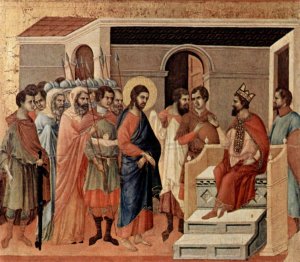 Like last week, also this week’s readings, one from the prophets and one from Mark’s Gospel, lead us to think about prophethood, or about our ability to hear and speak truthfully. This morning, in Mark’s Gospel we hear the account of the beheading of John the Baptist, which I suspect is a story known to many of us. The story occurs in all three synoptic Gospels, in Mark, Luke and Matthew.
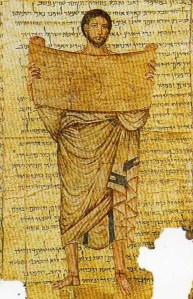 If we’re absolutely honest, I don’t think it’s hard to imagine the scene of today’s Gospel reading happening. For a moment, think back to the place where you have grown up. For some of you that may be this village, or nearby. For others it may be further away. Many of the children we went to school with, we probably haven’t seen for a while. Maybe we can think of one or two of them, who we would be surprised to see speak and teach in public with authority. So, yes, in some ways, we would probably be like one of the people in the synagogue, surprised to see someone come back and teach.
 Discovering Life