A homily for the Feast of Pentecost: Acts 2.1-21 & John 14.8-17
It’s the Feast of Pentecost, and not surprisingly we hear this morning the remarkable reading from the Acts of the Apostles. The disciples are filled with the Holy Spirit, and they begin to speak in other languages. Of course, those who hear the noise are bewildered, and they go and see what has happened. To their astonishment, each one of them hears the disciples speaking in their own native language, and telling them about God’s deeds of power.

Although on some level, this means that everyone is able to understand what the disciples are saying, not everyone does fully comprehend: some sneer and accuse Jesus’ followers of being drunk. This raises the question about which I would briefly like to think this morning: “what do we need to understand?” From our reading we gather that being addressed in our native tongue alone is not enough, so what else do we need? To answer this question, I would like to look at our reading this morning in two metaphorical ways, two additional layers of meaning without intending to deny the reading of the events as historical. Continue reading “Speak love; hear truth”
 This year is the third year in which Churches throughout the world are joining in an initiative called ‘Thy Kingdom Come’. It started in 2016 as an invitation from the Archbishops of Canterbury and York to use the eleven days between Ascension Day and Pentecost as a time to renew our commitment to prayer. Since then, the initiative has grown into a worldwide, ecumenical movement with Churches from over 65 different denominations in 114 countries around the world. One can wonder of course if it is a good thing to even have 65 different denominations, but it shows the scale of the movement.
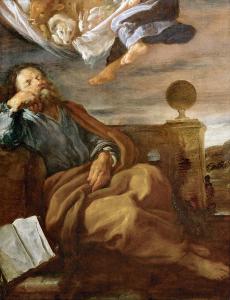 I remember a Church meeting a few years ago, in which there was a disagreement over the right course of action. I don’t quite remember what the conversation was about, but maybe it was something rather trivial like the colour of painting, or maybe more precisely, the shade of white we were going to use to paint the church hall. It was clear it was hard to find a way forward as too many people had a too passionate opinion about the matter. Until one person said “Well, I have prayed about this and we need to go for ivory white.” So, the decision was made: it is hard to argue with God’s word.
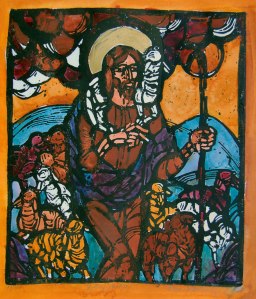 I wonder what you think about the question above; a question that the Jews ask Jesus in our Gospel reading today: is it an unreasonable request? Or is it a question we have asked ourselves at times too? If God exists, why doesn’t he show himself a bit more clearly? It is a question I often hear my pupils asking when we speak about the possibility of the existence of God. Their argument is fair enough: if God is all-powerful and all-loving, why doesn’t he show himself, why does he allow suffering in the world? It is an age-old question, and I don’t think that there is a completely satisfactory answer to it. For me, Jesus’ reply to the Jews this morning may point in the direction in which we may start to look for an answer, but not without difficulty.
 John’s purpose is to articulate the belief that Jesus was the Son of God, who was born in human form, died and rose again. He is trying to understand and to help us understand what it means for the Scriptures to be fulfilled as the Word became flesh. In contrast to some other parts of Scripture, I would like to suggest therefore that the theological background of this particular passage is more important than its historical context, and so that is what I would like to focus on this morning, hoping that it will give us a better appreciation of what Jesus may have meant by that last – easily misinterpreted phrase – ‘You always have the poor with you, but you do not always have me.’
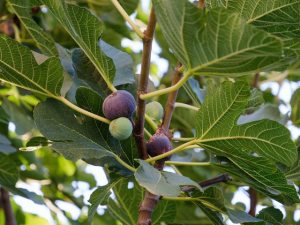 In
In
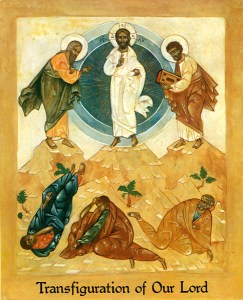 On this last Sunday before Lent, we traditionally hear the account of Jesus’ transfiguration before his disciples. It has strong resonances with the account of Moses receiving the Ten Commandments on Mount Sinai, and it is a few of those I would like to explore this morning.
 Discovering Life