Sermon 16th February 2020, Worcester College Oxford
2nd Sunday before Lent: Genesis 1.1 – 2.3 & Matthew 6.25-34
Our readings tonight invite us to think about the relationship between Creator and creation, the place of the human person within this relationship, and therefore also our attitude towards creation. Particularly in a weekend in which the UK is battered by another storm, of course climate change comes to mind, so this may be a good moment to reflect on the way in which we live in this world. Although I believe that we urgently need to change our behaviour and that Christians should be at the forefront of this change, I also believe that it is not too late, and so our message can be a message of hope, rather than one of desperation.
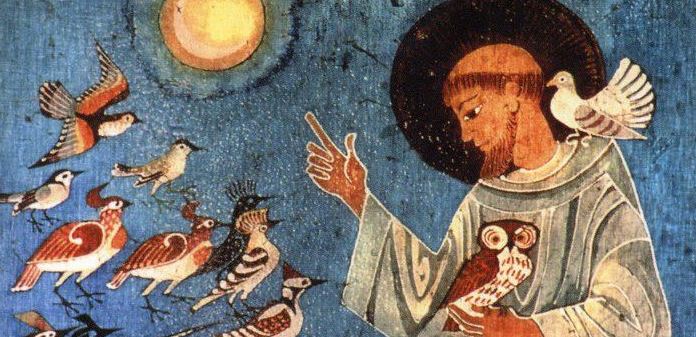
Within Christianity, there has been a wide range of different approaches to the way in which we treat the world in which we live. Each of them is the result of a particular theological and cultural understanding of the relationship between God and His creation. Through progress in the sciences, our understanding of the world has deepened and widened, as well as our understanding of the place of the human person within the world. These scientific insights have impacted also on the question how we should treat our surroundings.
 ‘Don’t worry’ is not quite the same as ‘don’t try’ and even more different from ‘don’t care’. On the contrary, if you try and care, there is no reason to worry, however difficult this may be. Just a couple of example to illustrate this. The first one may be very much on your mind at the moment, or hopefully for at least some of you here: upcoming exams. And of course, a lot of you are worried, because they are important and may well have an impact on your future. That’s why you should care and try – which in this case means work hard.
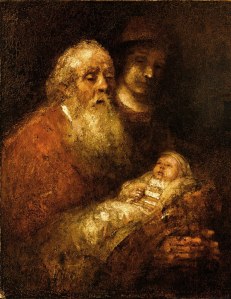 The story we hear this morning will be familiar to many: the presentation of Jesus in the temple. Following Jewish tradition, Joseph and Mary present Jesus, their first-born son, in the temple to give thanks and ask God’s blessing upon his life. They encounter two people, Simeon and Anna, who are often mentioned in one breath. But looking a little closer, it these two people do not have as much in common as we might think. This morning, I’d like to have a closer look at the person of Simeon, and what happens to him when he sees Joseph, Mary and their child.
 One of the things I dislike is when someone tells me what to do, and I am sure that I am not the only one. Here at school there are quite a lot of things you are told to do, and I suspect that some of you feel the same about those things as I, when I am told that I have to do something. There are quite a few things in life you will just have to do. Not only when you’re at school, but also when you embark on your next stage of life and even beyond. Fortunately, there are also a lot of things you are invited to do, and often they have a very different feel to it.

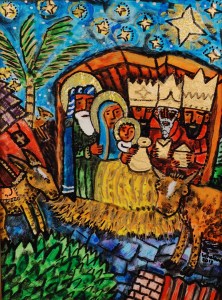 The Gospel reading set for the Feast of the Epiphany is the reading of the wise men visiting Jesus: a scene we often associate with the Christmas story itself. Indeed, it is the Christmas story in Matthew’s Gospel, who does not include shepherds or choirs of angels as in Luke’s version, but narrates the story of the Incarnation here. Hence, the Christmas story as we often hear it in nativities and see it in cribs is a conflation of the two different Gospel accounts.
 So last week, my eye was caught by the story you may have read or heard as well. It was the news item that a young girl had found a message in a Christmas card she was about to write: a message that claimed to have come from within a Chinese prison. Someone wrote in English “We are foreign prisoners in Shanghai Qinqpu prison in China. Forced to work against our will. Please help us and notify human rights organization.”
 Discovering Life