Friend, do what you are here to do
The tragedy of Judas
The second of three reflections for Passiontide, based around the stories of Peter, Judas and Jesus. They are based on reflections for Good Friday, delivered at St George’s Preshute in 2017.
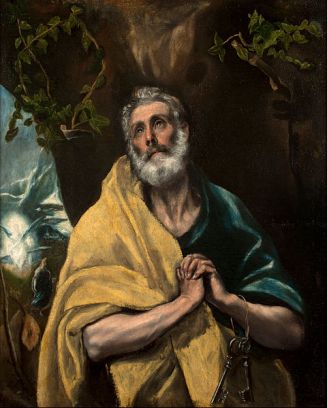
 Jesus said to Judas: Friend, do what you are here to do. There has been a lot of controversy over the role of Judas in Jesus’ passion. The fact that Jesus addresses Judas here as friend has either been understood to be ironic or as a sign that Jesus still cares about him. Maybe even more so, it has been debated if it was Judas’ God-given destiny to betray Jesus, or an act of free will? And in either case, was there still the possibility for redemption, either before or after Judas’ death? Or is he the prototype of evil, someone for whom there is no hope?
 In contrast to Advent, it seems to me, where every Sunday we light one more candle until it is Christmas, in Lent, the mood gets darker and darker as we approach the end of the season. Indeed, Good Friday still stands between us and Easter at this point. Personally, I find myself often conflicted in these last weeks before Easter: part of me is eagerly anticipating the joy of the Easter celebration, whilst another part of me knows there is still more work to be done before I am ready to appreciate the fullness of Jesus’ Resurrection. I almost feel like I’m watching a solar eclipse on the horizon: the shadow of Good Friday slowly moving to cover the glory of Easter, only to be seen again in all its fullness when the shadow has passed.
 This fourth Sunday of Lent, half-way through the austere season leading up to Easter, is also Mothering Sunday. Traditionally it was a day when children, daughters mainly, were given a day off to visit their mother and family. However, the ‘mothering’ part of this Sunday has its roots in a tradition that didn’t have much to do with our biological mothers.
 This morning we hear what I assume are two quite familiar passages: The Ten Commandments and the cleansing of the temple. I would like to suggest this morning that both these readings teach us something about who God is, and hence, can give us an insight in who we are, and who we are meant to be.
 Friday evening has always been my favourite evening of the week. Before I was a vicar, it meant it was the beginning of the weekend. When I became a vicar, it meant the only evening without meetings or sermons to write. And when I joint the College, it became my duty evening in New Court, on of the girls’ boarding houses. Certainly aided by the Housemistress’s hospitality and a glass of wine, I really enjoy the range of conversations you girls have in your houses, and the way in which you let tutors share in them.
  Discovering Life